Guide
Pick a shape by the body area, not by the photograph
Which outline holds contact on a calf, a shin or a jaw, with the counts and lengths measured from this catalogue.
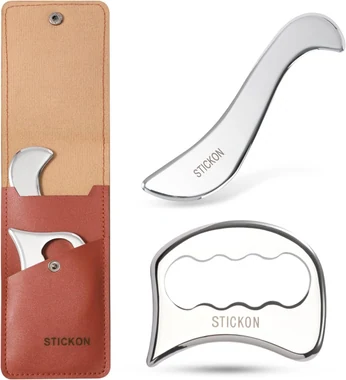
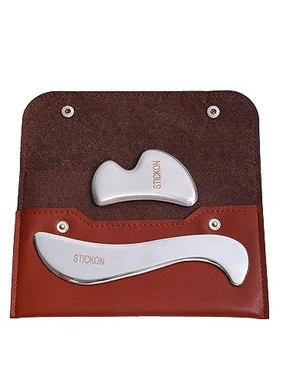
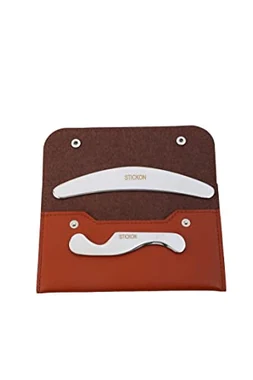
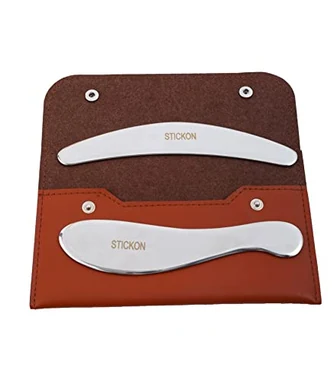
Photographs of steel tools all look the same at thumbnail size: something shiny, curved, lying on a white background. The difference that matters is which surface of a body the outline can stay in contact with, and you cannot see that in a photograph.
This guide sorts the range by that question. The numbers come from this catalogue and are recounted every time we update prices.
The areas the maker names
Each product page lists the areas the tool was cut for, in the maker's own words. We count those words rather than guess from the outline. Here is how the 67 tools fall out.
Two things stand out. Arms, back, neck and legs appear on almost everything, because a medium curve handles all four. Feet and face appear rarely, and those are the pages worth reading closely if that is your reason for buying.
| Body area | Tools that name it | From |
|---|---|---|
| Back and spine | 63 | $9.99 |
| Neck and jaw | 63 | $9.99 |
| Arms and forearms | 66 | $9.99 |
| Legs and calves | 63 | $9.99 |
| Chest and shoulders | 62 | $9.99 |
| Small joints | 60 | $9.99 |
| Feet | 21 | $16.99 |
| Face | 7 | $12.99 |
Long curve, hook, comb
A long curve is the default. It rides a calf, a hamstring or the side of a thigh and keeps contact for the whole pass, which is what makes the work feel smooth instead of scratchy.
A hook or a sickle gives up that contact on purpose. Its job is the shin, the edge of the spine, the space beside a tendon, all places where a wide curve floats off the surface after an inch.
A toothed or combed edge spreads force across several contact points. People with skin that marks easily start there, and so do people working on a thigh that is sore from the day before.
A pen is not a scraper at all. It puts everything on one point, which suits a knot you can already find with a thumb and suits nothing else.
Size, weight and what they change
Length decides reach. Weight decides how much of the pressure comes from the tool and how much from your arm.
Across the tools where the maker states a length, the range runs from 3 to 16.1 inches. Where a weight is stated, it runs from 2.8 to 88.2 ounces. A light tool follows the hand and asks for effort. A heavier one settles into the tissue, which helps on a big muscle and hurts on a shin.
| Kind | Tools | Length range | From |
|---|---|---|---|
| Tool sets | 32 | 7″ to 16.1″ | $19.99 |
| Trigger point pens | 3 | 3″ to 4″ | $12.99 |
| Single scrapers | 32 | 3.15″ to 8″ | $9.99 |
One tool or a set
A single scraper costs from $9.99 here, and a set of two or three costs from $19.99. The arithmetic favours the set once you want a second outline, which most people do within a month.
The honest case for a single tool is different. If you only work on legs, a set is money spent on shapes that will sit in the drawer. Buy the curve, use it for a season, then buy the hook when a shin asks for one.
Where this guide stops
We can tell you which surfaces an outline holds and what the maker states about size. We cannot tell you which shape suits your shoulder, and neither can anyone writing a page without seeing it.
If you are working around a diagnosed problem, a fresh injury or a joint that has been operated on, ask the clinician who knows the case. The guide on the research says why we keep repeating that.